Railroad Empire: Train Game
- 4.3
- Rating
- 5.00M
- Installs
- Free
- Price
 Analysis by App-foxy
I spent time with Railroad Empire: Train Game as a mobile railway simulation, and my first impression was that it sits between a relaxed building game and a light business-management challenge. The basic idea is easy to understand: expand a rail network, improve trains, and connect cities. What makes the experience more interesting is the constant need to decide what deserves attention first. A new route may look attractive, but an upgrade can sometimes make an existing network more useful.
That balance makes it a good fit for players who enjoy watching a system grow rather than chasing a purely action-focused goal. I also found it more approachable than many detailed transport simulators, although it still asks for patience once the railway becomes busier. The game is free to install, rated for Everyone, and developed by Azur Interactive Games Limited. Its current version is 6.3.4, with support beginning at Android 8.0.
How the railway experience feels in everyday play
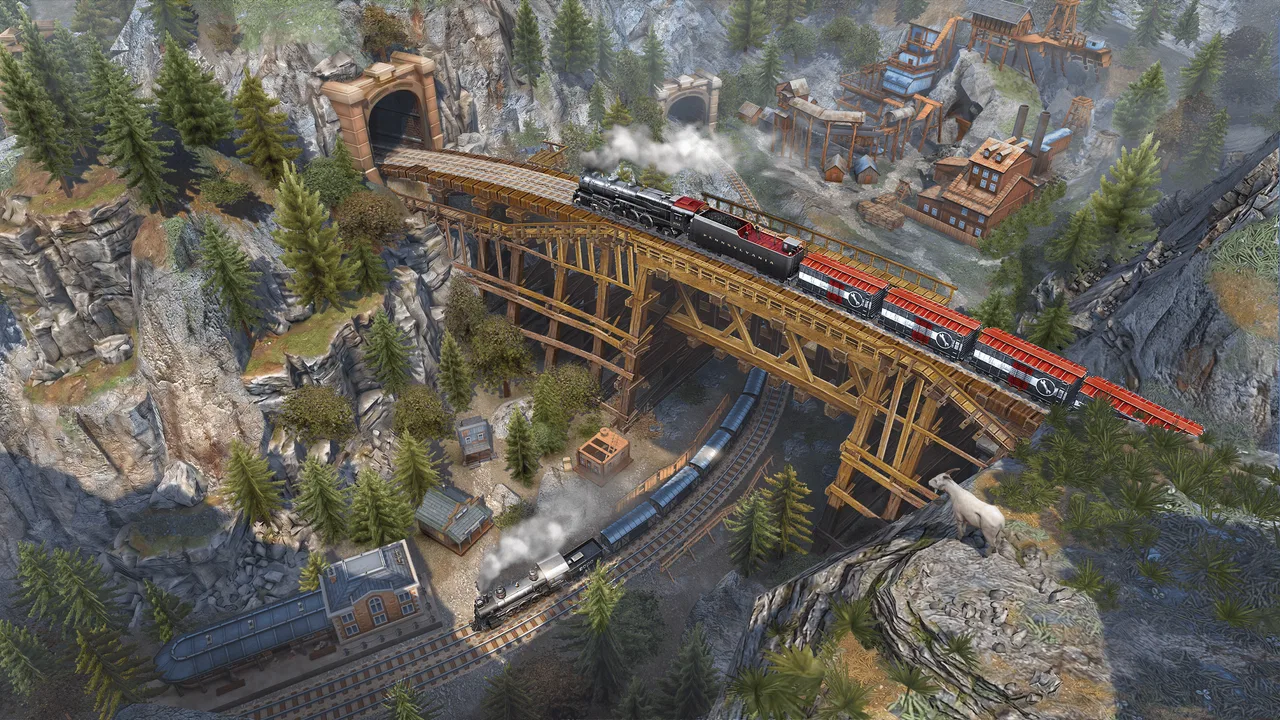
The strongest part of the game is the simple loop. I begin with a modest rail operation, improve what I can, and gradually connect more places. Each decision has a visible effect on the network, so progress feels more satisfying than merely collecting rewards from a menu. The railway becomes a project I can return to, inspect, and adjust rather than a sequence of unrelated levels.
You May Also Like

 Blood Strike: 2.5 Anniversary
Blood Strike’s Loadouts Turn Every Drop Into a Tactical Gamble
A close look at Blood Strike’s custom loadouts: how fast access to signature weapons reshapes its battle royale rhythm, rewards preparation, and narrows the gap between fights.

 Pandora - Music & Podcasts
Pandora’s Music Is Easy to Start, but Harder to Recover
Pandora’s strength is its low-effort path from a seed to a station. Its weak spot is how much confidence it asks you to place in connection, setup, and quiet recovery.

 8 Ball Pool
 Is Built on Rivalries, Rematches, and Routine
A close look at the rivalries, rematches, shared routines, and unanswered safety questions that turn a quick pool match into a persistent mobile community.

 Samsung Music
’s Quiet Strength Is Playing What You Already Own
Its reach comes less from spectacle than from dependable access to a personal library. That simplicity is both the app’s strongest retention engine and its ceiling.

 AccuWeather: Weather Radar
AccuWeather Review: A Quick, Clear Forecast for Everyday Decisions
For everyday plans, the best forecast is the one you can understand quickly. AccuWeather makes rain timing, radar, and local conditions easy to act on, with a few trade-offs.

 Hill Climb Racing
Why Hill Climb Racing Still Turns Crashes Into One More Run
A tiny car, a bumpy hill and one more upgrade: Hill Climb Racing keeps resurfacing because its simple chaos makes every near-miss feel personal.
More From Our News Desk



In practical terms, this works well during short breaks. If I have only a few minutes, I can check the current state of the network and make one useful improvement. When I have more time, I can think about the order of upgrades and whether expanding immediately is wiser than strengthening what is already running. That flexibility is important for a mobile simulation because not every player wants a session that demands uninterrupted concentration.
The business side gives the building activity a purpose. Trains and connections are not just decoration; they support the larger goal of making the railway more capable. I liked that the game encourages me to think in terms of priorities. Spending everything on a visible expansion can leave the rest of the network feeling underdeveloped, while a less exciting upgrade may improve the whole operation.
My main advice is to avoid treating every available improvement as equally urgent. I found it more comfortable to pause and identify the part of the railway that was slowing progress. That approach reduces unnecessary tapping and makes the game easier to follow, especially when several possible actions appear at once.
Readability and navigation on a small screen
For a simulation with several layers of information, the overall concept is readable. The central railway view gives me a clear sense of place, while the management choices are presented around the network rather than hidden behind a completely separate experience. I could usually understand whether I was looking at a train, a connection, or an upgrade path without needing to memorize a complicated control scheme.
Still, readability is not only about whether words are technically visible. It is also about how quickly I can distinguish important information from secondary details. As the railway develops, the screen can feel more demanding because routes, trains, and management choices compete for attention. Players who prefer large text, strong contrast, or very spacious interfaces may find themselves needing to slow down and inspect each area carefully.
I recommend playing with the device held in the position that gives the clearest view rather than automatically choosing the most convenient grip. A larger phone or tablet can make the network easier to examine, particularly for anyone who finds small interface elements tiring. I also prefer making decisions in a quiet moment instead of trying to manage the railway while walking or dealing with other distractions.
Navigation is most comfortable when I follow a repeatable routine. I first inspect the network, then check which train or connection needs attention, and only afterward look at upgrades. This prevents me from jumping between unrelated menus and helps me remember what I intended to change. That routine is a small adjustment, but it makes the game feel less cluttered.
One useful insight is that the game rewards visual scanning more than rapid reactions. I do not need to tap quickly to enjoy it. I get better results by looking at the whole railway and considering the next sensible step. That makes it potentially suitable for players who enjoy deliberate planning, while those seeking fast, highly responsive input may find the pace too measured.
Motor and sensory considerations
The game’s main interaction is based on selecting and managing railway elements rather than controlling a character through demanding action sequences. In my experience, that lowers the pressure on precise movement and rapid timing. Someone who prefers slower, decision-based play may find this more comfortable than a racing game or an action simulator that constantly asks for quick swipes.
That does not mean every player will find the controls effortless. Mobile management games can still involve repeated tapping, small targets, and frequent visual checking. Players with limited dexterity may benefit from using a stable surface, supporting the device with one hand while interacting with the other, or taking breaks before hand fatigue appears. I would not approach a long session as one continuous task; short sessions are more manageable and fit the game’s structure well.
For sensory comfort, the railway theme is calmer than a crowded combat game, but the screen can become visually busy as the network grows. Moving trains and multiple points of interest may be engaging for some players and tiring for others. I found that reducing environmental distractions around me made it easier to focus on the route layout. A quiet room, moderate screen brightness, and a larger display can make a meaningful difference even though those adjustments are outside the game itself.
Audio preferences also vary widely. I tend to keep game sound at a level that supports the atmosphere without becoming the main focus. If you are sensitive to repeated effects or simply prefer a quieter experience, playing with sound reduced may make the management decisions feel less overwhelming. The important point is that the game can be approached as a visual planning activity rather than something that requires constant sensory stimulation.
A practical strategy for players who tire easily is to divide the railway into sections. Instead of trying to understand everything at once, I examine one city connection, one train group, or one upgrade decision before moving on. This is not merely a comfort trick; it also improves decision quality because I am less likely to overlook a useful detail when the screen becomes busy.
Situational access for different routines
Railroad Empire works best when I can give it partial attention without expecting it to entertain me instantly. It suits a commute, a waiting room, or an evening at home when I want something thoughtful but not intensely demanding. The ability to make gradual progress gives the game a natural place in a fragmented mobile routine.
However, I would not recommend managing the railway while crossing a street, operating a vehicle, or handling any task that requires full awareness. The game may feel slow enough to invite casual checking, but its decisions still need concentration. A safer habit is to finish one short action, put the phone away, and return later when the surroundings are suitable.
It is also a reasonable option for players who dislike games that punish every pause. I can step away and come back without feeling that I have missed a rapid event. That makes it more accommodating for people with irregular schedules, family responsibilities, or workdays where gaming time arrives in small pieces.
On the other hand, players who need a game that works comfortably with one hand may need to test their own device and grip. The railway view and management choices can ask for more deliberate handling than a simple puzzle. A tablet may improve visibility but can be less convenient to hold, so the best setup depends on whether your priority is portability or a larger planning surface.
The game can also work as a shared activity. I enjoyed discussing route priorities with another person, because the railway creates clear questions: should the next effort go toward expansion, train improvement, or strengthening an existing connection? It is not a traditional multiplayer conversation, but the planning decisions are easy to explain, which makes the game approachable for someone watching over your shoulder.
Where the experience still creates barriers
The biggest barrier is information density. A player who has difficulty distinguishing small visual elements or tracking several changing details may find the later management screens tiring. The game communicates through its railway layout and upgrade choices, so visual attention remains central. I would not describe it as a strong choice for anyone looking specifically for extensive built-in accessibility controls.
Another limitation is the presence of in-app purchases. The game itself is free, but optional purchases range from $0.99 to $124.99 per item. That wide range makes it important to decide in advance how you want to play. I prefer treating purchases as something to avoid unless I have already established that the game deserves more of my time. Players who are uncomfortable with monetized progression should approach the store elements cautiously.
The free entry point is helpful for testing the experience, but it can also create a question about pacing. If progress begins to feel slower, the temptation to spend may become part of the decision-making. I found the best way to protect the relaxed nature of the game was to focus on improving my planning rather than assuming every delay required a purchase.
There is also a difference between this game and a full desktop transport simulator. Railroad Empire is easier to pick up, but that convenience comes with less room for extremely detailed operational control. If you want a deep recreation of timetables, engineering constraints, or large-scale logistics, a dedicated computer simulator may be a better match. If you want a mobile railway project that can be handled in shorter sessions, this game is more practical.
Compared with a typical city-building game, the railway gives progress a more focused shape. I am not managing every public service or decorating an entire metropolis; I am thinking about movement, connections, and the usefulness of trains. Compared with a pure idle game, it asks for more involvement because I can make choices rather than simply watch numbers rise. That middle ground is its identity, but it will not satisfy players who want either complete automation or highly technical realism.
Who will enjoy it, and who should skip it
I would recommend it to players who like simulation games with a clear theme, gradual expansion, and decisions that remain understandable on a phone. It is especially suitable if you enjoy checking a growing system, identifying its weak point, and making one improvement at a time. The Everyone rating also makes the presentation broadly approachable, though individual comfort with small interface elements and purchase prompts will still vary.
I would be more cautious about recommending it to someone who wants immediate action, constant novelty, or a fully hands-off idle experience. It can feel repetitive if the appeal of building a network does not hold your attention. I would also suggest looking elsewhere if your main requirement is advanced accessibility customization, deep transport realism, or a game that never presents optional spending.
New players should begin by learning the relationship between routes, trains, and upgrades instead of expanding as quickly as possible. My most useful habit was to ask whether an improvement solves a current problem or merely looks attractive. That question keeps the network coherent and reduces the chance of spreading resources too thinly.
For returning players, I suggest setting a small objective before opening the game. For example, I might decide to improve one connection or make one part of the railway easier to manage. This creates a natural stopping point and is particularly helpful for players who find open-ended management games mentally tiring.
My inclusive verdict after using the railway
Railroad Empire: Train Game is a thoughtful mobile simulation that makes railway growth easy to understand without turning every session into a technical exercise. I appreciate its slower planning rhythm, its suitability for short visits, and the way upgrades give each decision a practical purpose. Its accessibility is strongest in its low-pressure structure and its lack of action-heavy control demands, not in a long list of specialized options.
The game has attracted a substantial audience, with a 4.3 average from around seventy-two thousand ratings and over five million installs. Those figures suggest that its straightforward railway concept has broad appeal, but they do not remove the personal questions that matter most: can you comfortably read the network, tolerate a busy screen, and enjoy progress that may invite optional spending?
My final recommendation is to try it if you want a calm, goal-oriented railway game that fits around an ordinary day. Use a larger screen when possible, take breaks during longer management sessions, and decide your spending boundaries before the network becomes demanding. Its best quality is the freedom to plan at your own pace, while its main weakness is that visual density and monetization can make that relaxed feeling less consistent.
For me, that trade-off is acceptable because the core railway decisions remain engaging. I would not call it the most detailed or universally accessible transport game, but I would recommend it to a friend who wants a free simulation with a clear identity and enough strategic choice to make each growing connection feel earned.
FAQs for Railroad Empire: Train Game
01What is Railroad Empire: Train Game about?
Railroad Empire: Train Game is a railway management and strategy game in which you build a transportation company from the ground up. You can lay tracks, connect cities, purchase and upgrade locomotives, manage routes, and expand your industrial network. The main challenge is balancing income, expenses, cargo demands, and expansion while competing against changing economic and logistical conditions.
02Can I play Railroad Empire: Train Game offline?
The game may allow some single-player management and campaign features to work without a constant internet connection, but online access can still be required for updates, cloud synchronization, advertisements, purchases, events, or certain connected features. Availability may also depend on the version installed and the platform. It is best to launch the game online at least once and check which features remain accessible offline.
03Is Railroad Empire: Train Game free to download and play?
Railroad Empire: Train Game can generally be downloaded without an initial purchase, but free access does not necessarily mean that every feature is available at no cost. Depending on the version, players may encounter optional in-app purchases, advertising, premium resources, or progression systems that can speed up development. Review the store listing and purchase settings before starting.
04Is Railroad Empire: Train Game suitable for beginners?
The game is approachable for newcomers because its basic objectives are easy to understand: connect locations, transport goods, earn money, and improve your railway network. However, later stages require more careful planning, especially when choosing routes, managing locomotive capacity, and controlling operating costs. New players should follow the tutorial, avoid expanding too quickly, and reinvest profits strategically.
05What devices are needed to run Railroad Empire: Train Game smoothly?
The exact requirements depend on whether you use the Android or iOS version, as well as the game’s current updates. A relatively recent device with enough free storage, updated system software, and stable graphics performance should provide the best experience. Older phones or tablets may experience longer loading times, reduced visual quality, or occasional slowdowns when the railway network becomes more complex.
Pros
- Detailed railway management with routes
- schedules
- and upgrades to control.
- Smooth controls make it easy to manage trains on a mobile screen.
- Varied missions provide clear goals beyond simply expanding your network.
- Train customization adds a personal touch to your growing railway company.
- Works well for players who enjoy relaxed
- strategic tycoon gameplay.
Cons
- Progress can feel slow when upgrades require substantial resources or waiting.
- The interface may feel crowded until you become familiar with every menu.
- Some missions offer limited freedom compared with a full sandbox mode.
- Repeated management tasks can become monotonous during longer play sessions.
- Performance may vary on older devices
- especially with larger rail networks.

Railroad Empire: Train Game
Gallery